


Risk Intelligence
Stabilitas: Designing Clarity for High-Stakes Decisions
Stabilitas: Designing Clarity for High-Stakes Decisions
Role: Lead Product Designer Stage: Growth / Pre-acquisition Domain: Situational awareness, critical event management, enterprise SaaS Outcome: Platform redesigned and shipped as Stabilitas 2.0. Acquired by OnSolve. Design assets used directly in acquisition materials.
Role: Lead Product Designer Stage: Growth / Pre-acquisition Domain: Situational awareness, critical event management, enterprise SaaS Outcome: Platform redesigned and shipped as Stabilitas 2.0. Acquired by OnSolve. Design assets used directly in acquisition materials.
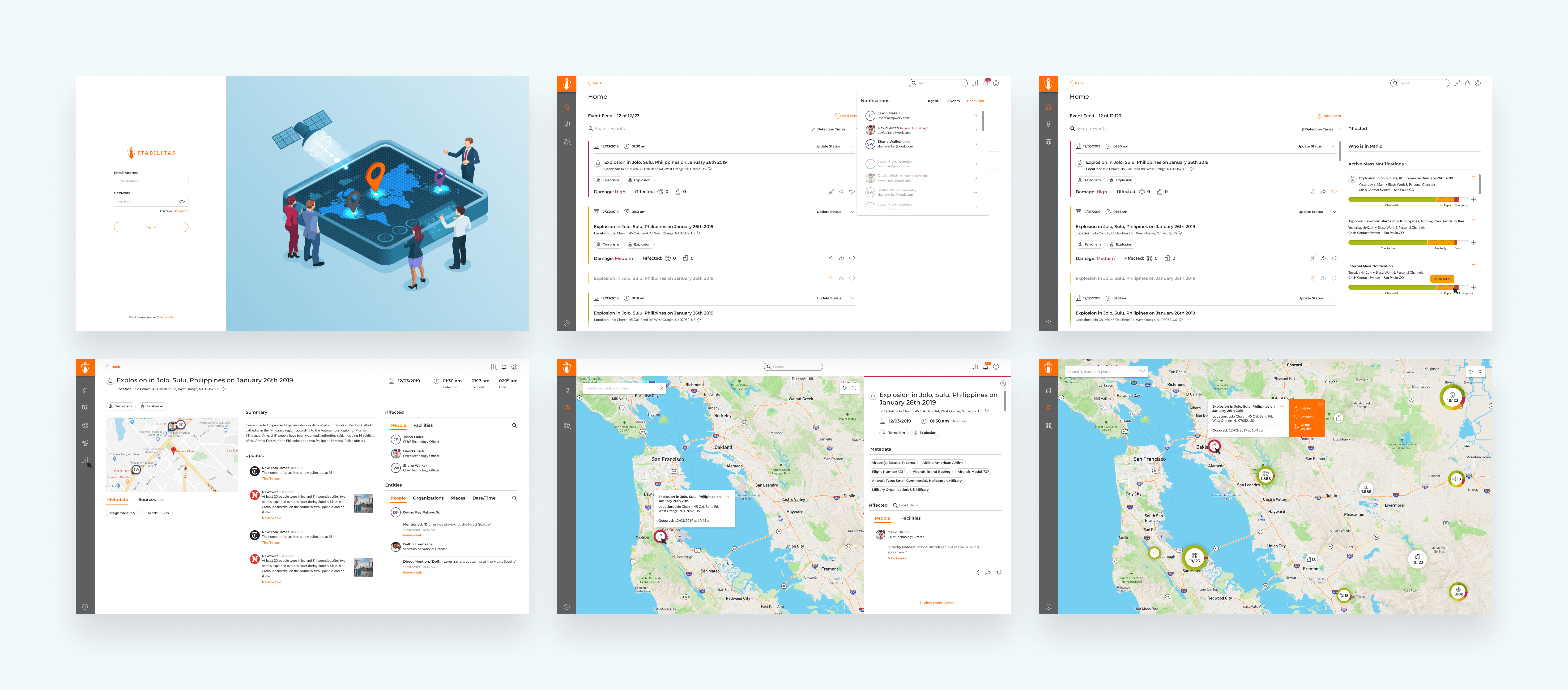
Security and risk teams were working with a platform that buried critical information inside a cluttered interface. When seconds matter, visual noise is a product failure. I redesigned the information hierarchy around a three-state urgency system: passive, attention, alert. The platform shipped as Stabilitas 2.0 and was acquired by OnSolve shortly after. Design assets were used directly in acquisition materials.
Security and risk teams were working with a platform that buried critical information inside a cluttered interface. When seconds matter, visual noise is a product failure. I redesigned the information hierarchy around a three-state urgency system: passive, attention, alert. The platform shipped as Stabilitas 2.0 and was acquired by OnSolve shortly after. Design assets were used directly in acquisition materials.
The Problem With Information-Dense Interfaces
The Problem With Information-Dense Interfaces
Stabilitas gave enterprise security teams visibility into global events that could affect their people and locations. The intelligence was strong. The interface was not keeping up with it.
The platform had accumulated data without hierarchy. Everything competed for attention equally, which in practice meant nothing got attention quickly. For a security professional monitoring multiple regions, that's not an inconvenience. It's a risk. The product's value was directly tied to how fast a user could assess a situation and decide whether to act.
The design question was precise: how do you surface what matters most without discarding everything else?
Stabilitas gave enterprise security teams visibility into global events that could affect their people and locations. The intelligence was strong. The interface was not keeping up with it.
The platform had accumulated data without hierarchy. Everything competed for attention equally, which in practice meant nothing got attention quickly. For a security professional monitoring multiple regions, that's not an inconvenience. It's a risk. The product's value was directly tied to how fast a user could assess a situation and decide whether to act.
The design question was precise: how do you surface what matters most without discarding everything else?
What I Built: A Three-State Urgency System
What I Built: A Three-State Urgency System
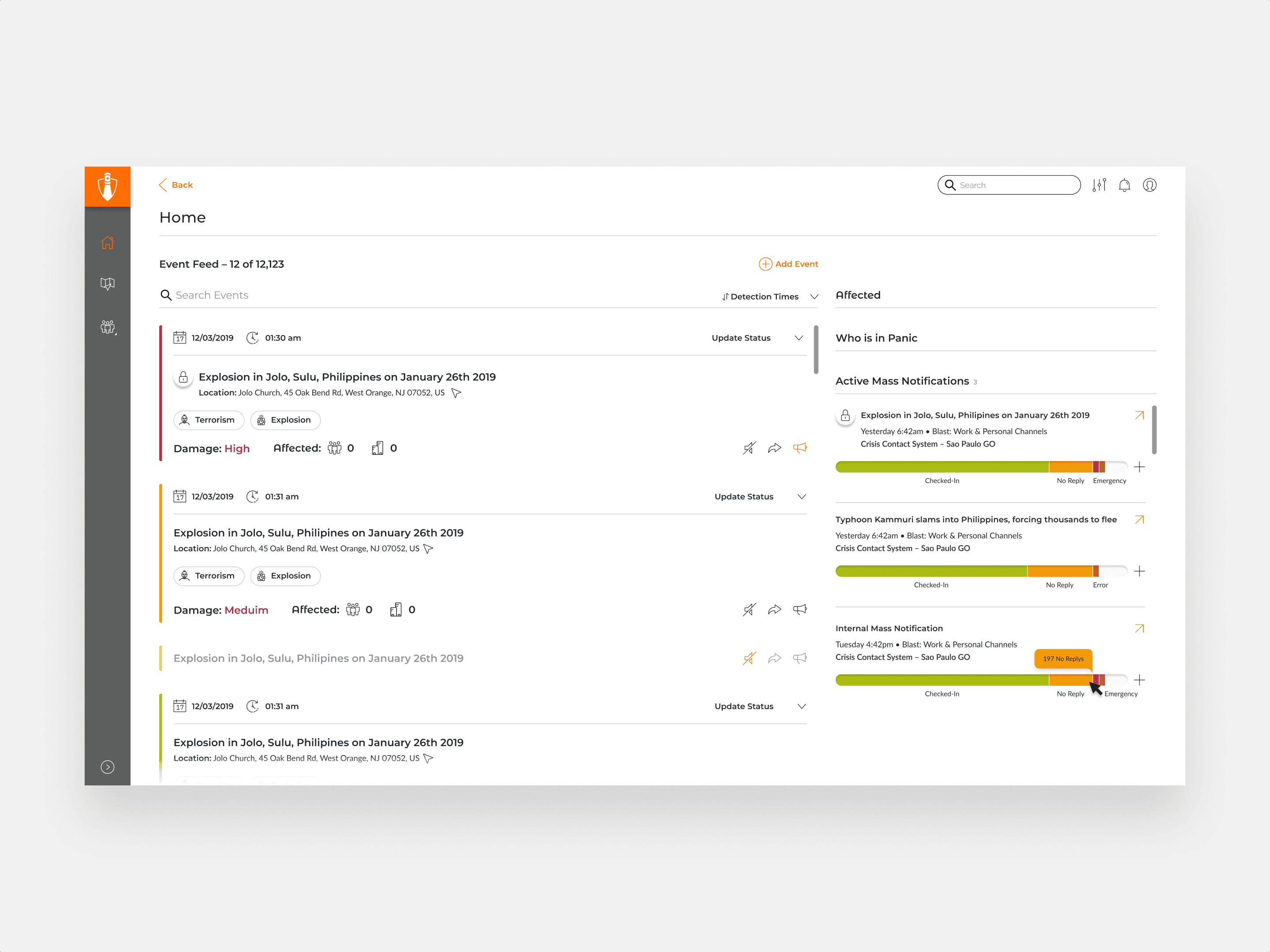
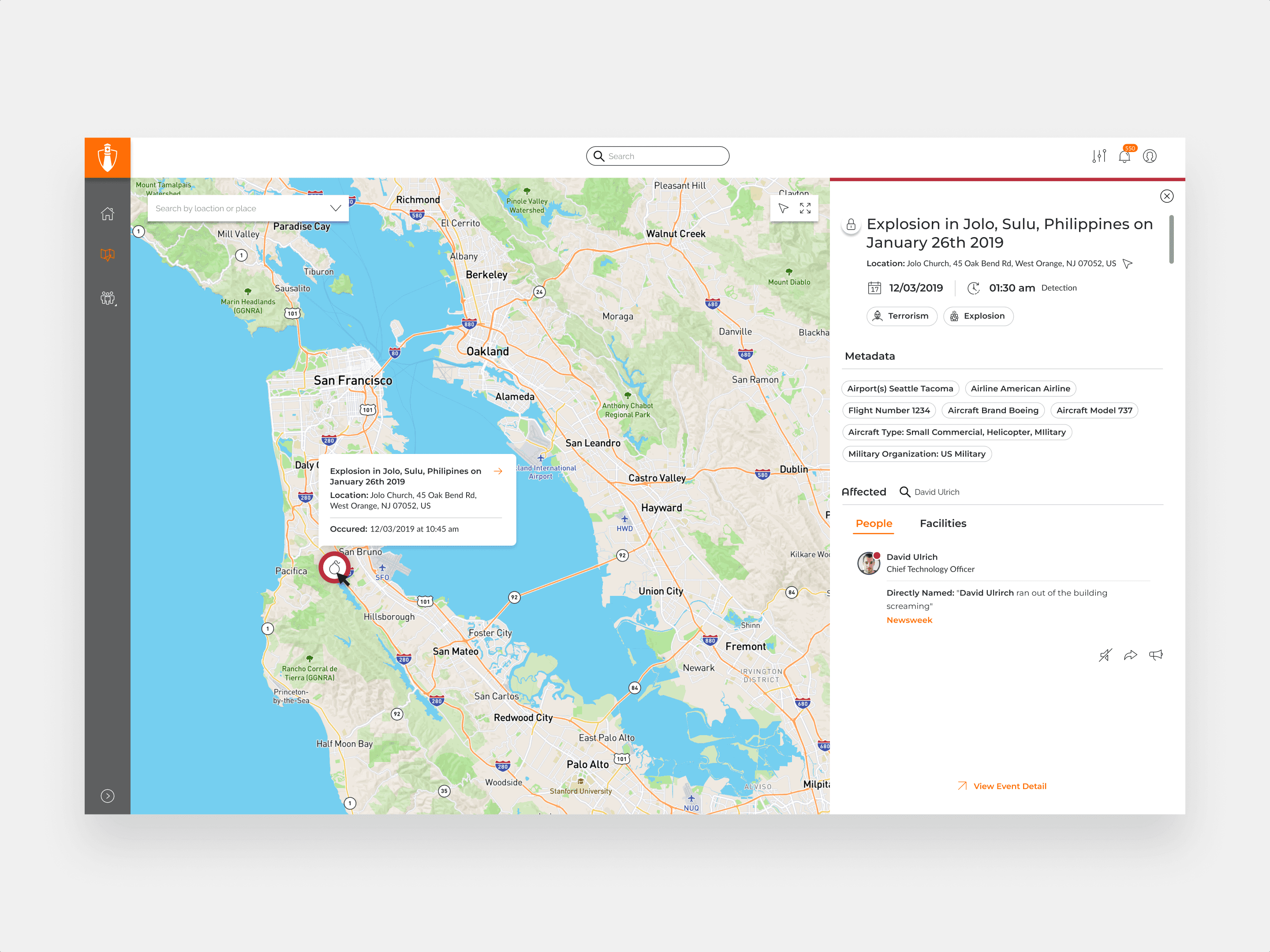
The existing interface treated all information with the same visual weight. I replaced that with a content hierarchy built around three clearly defined visual states: passive, attention, and alert.
Passive covered everything live and monitored but requiring no immediate action. Attention flagged situations that were developing and warranted awareness. Alert was unambiguous: something is happening that requires a decision now.
The visual language for each state was distinct enough to be read at a glance under pressure, not just in a calm review session. Color, iconography, and information density were all calibrated to urgency level. A user scanning the platform could orient themselves in seconds rather than minutes.
The existing interface treated all information with the same visual weight. I replaced that with a content hierarchy built around three clearly defined visual states: passive, attention, and alert.
Passive covered everything live and monitored but requiring no immediate action. Attention flagged situations that were developing and warranted awareness. Alert was unambiguous: something is happening that requires a decision now.
The visual language for each state was distinct enough to be read at a glance under pressure, not just in a calm review session. Color, iconography, and information density were all calibrated to urgency level. A user scanning the platform could orient themselves in seconds rather than minutes.
When seconds matter, visual noise is a product failure.
When seconds matter, visual noise is a product failure.
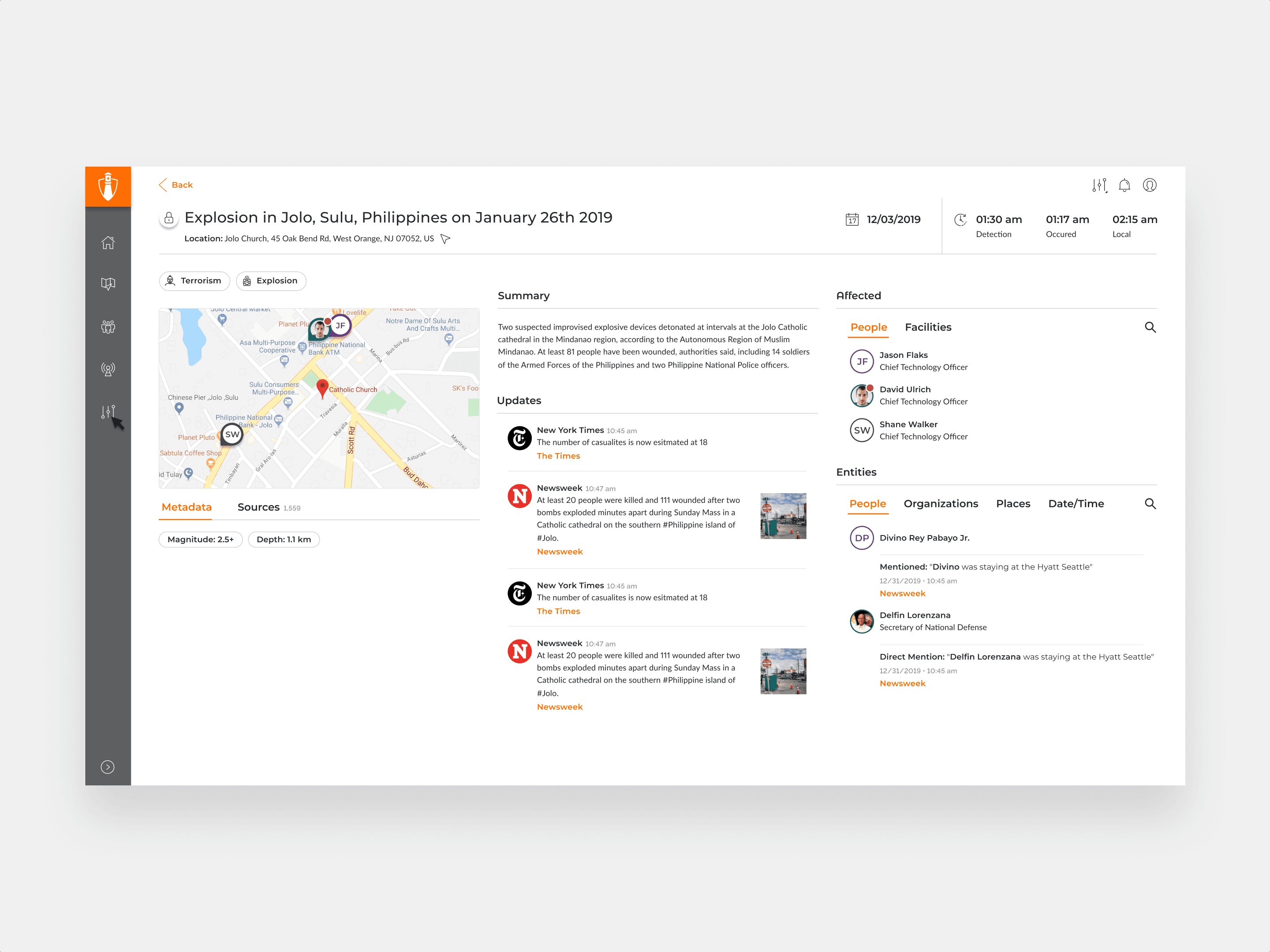
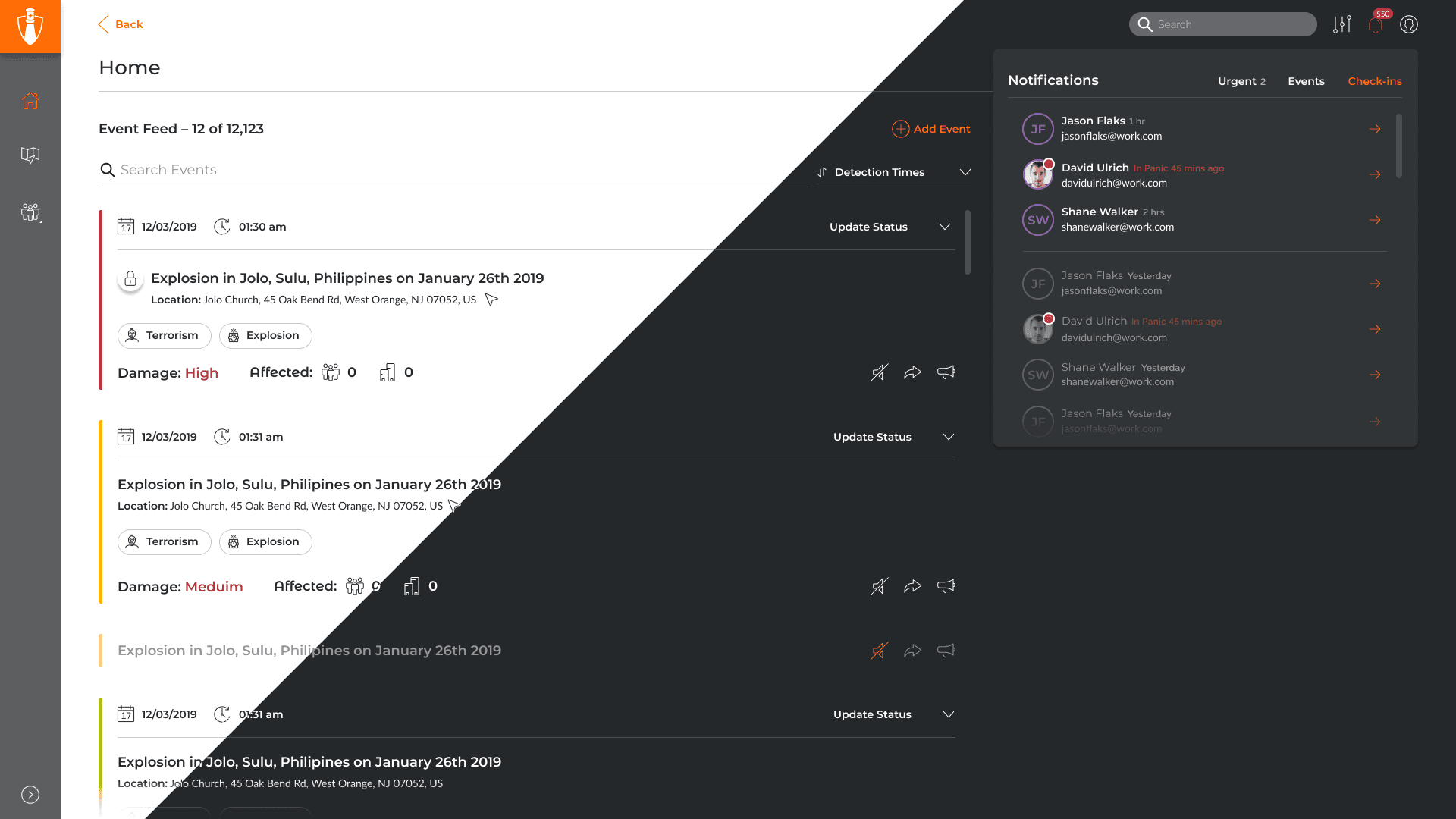
Alongside the urgency system, I restructured how information was grouped. Related data points that had been scattered were consolidated logically, reducing the cognitive load required to build a complete picture of any given situation. Primary information led. Secondary and tertiary detail was accessible but not competing.
The process was collaborative and iterative. Working sessions with the Stabilitas team validated which information groupings matched how security professionals actually think, not just how the data was structured technically.
Alongside the urgency system, I restructured how information was grouped. Related data points that had been scattered were consolidated logically, reducing the cognitive load required to build a complete picture of any given situation. Primary information led. Secondary and tertiary detail was accessible but not competing.
The process was collaborative and iterative. Working sessions with the Stabilitas team validated which information groupings matched how security professionals actually think, not just how the data was structured technically.
What the Redesign Changed
What the Redesign Changed
The 2.0 platform didn't just look cleaner. It fundamentally changed how users could work inside it. Response time to emerging situations improved because the interface was now doing the triage work that users had previously been doing manually.
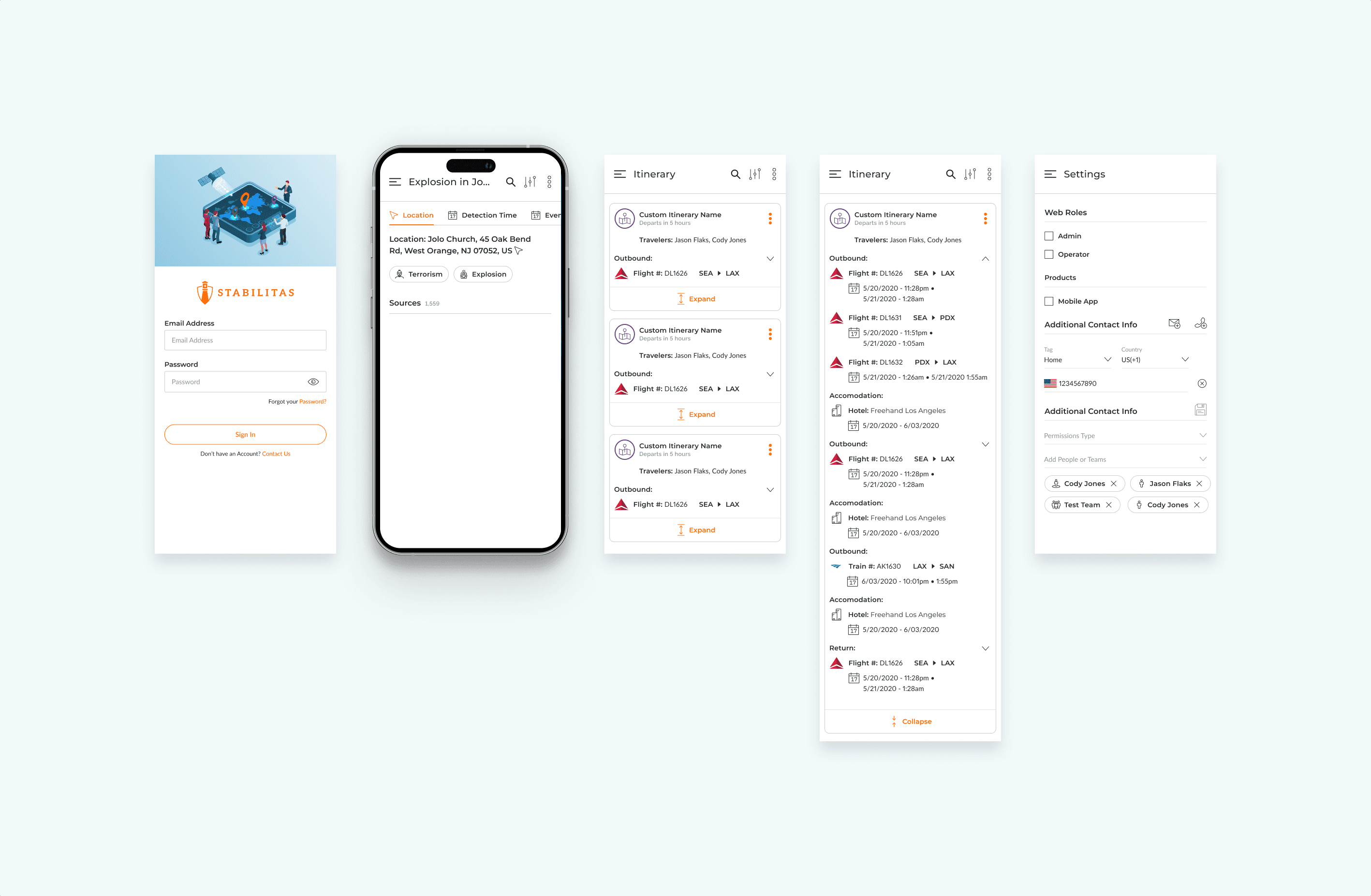
The transformation also repositioned Stabilitas in the market. What had been a situational awareness platform became a critical event management provider. That's not a rebrand. It's a product capability made visible through design.
When OnSolve acquired Stabilitas, the design assets from the 2.0 platform were used directly in acquisition materials. The interface was part of the value being acquired.
The 2.0 platform didn't just look cleaner. It fundamentally changed how users could work inside it. Response time to emerging situations improved because the interface was now doing the triage work that users had previously been doing manually.
The transformation also repositioned Stabilitas in the market. What had been a situational awareness platform became a critical event management provider. That's not a rebrand. It's a product capability made visible through design.
When OnSolve acquired Stabilitas, the design assets from the 2.0 platform were used directly in acquisition materials. The interface was part of the value being acquired.
What This Taught Me About Designing Under Constraint
What This Taught Me About Designing Under Constraint
High-stakes environments expose design problems that low-stakes ones forgive. An onboarding flow can recover from a confusing step. A security platform operating during a critical event cannot.
Designing for urgency requires a discipline that general UX work rarely demands: every visual decision has a functional cost or benefit. The three-state system only works if the distinction between states is immediately legible. The groupings only work if they match real mental models under pressure, not idealized ones.
The lesson I carried out of Stabilitas: constraint clarifies. When the cost of a wrong design decision is a delayed response to a real-world event, the prioritization becomes obvious. That clarity is something I now bring into every project, whether the stakes are that visible or not.
High-stakes environments expose design problems that low-stakes ones forgive. An onboarding flow can recover from a confusing step. A security platform operating during a critical event cannot.
Designing for urgency requires a discipline that general UX work rarely demands: every visual decision has a functional cost or benefit. The three-state system only works if the distinction between states is immediately legible. The groupings only work if they match real mental models under pressure, not idealized ones.
The lesson I carried out of Stabilitas: constraint clarifies. When the cost of a wrong design decision is a delayed response to a real-world event, the prioritization becomes obvious. That clarity is something I now bring into every project, whether the stakes are that visible or not.
Result
Result
Platform redesigned and shipped as Stabilitas 2.0. Acquired by OnSolve. Design assets used directly in acquisition materials.
Platform redesigned and shipped as Stabilitas 2.0. Acquired by OnSolve. Design assets used directly in acquisition materials.
Platform redesigned and shipped as Stabilitas 2.0. Acquired by OnSolve. Design assets used directly in acquisition materials.




Additional Work
Additional Work
Additional Work